It is one of our brightest ideas yet – the Volkswagen ID.4 EV! The ID.4 serves as our commitment to a cleaner environment and sustainable transportation. It accommodates up to five people inside with a spacious area for luggage or a major shopping trip. Our EV SUV is packed with the latest technology to keep you informed, entertained, and safe every mile of the way. ID.4 customers can choose a rear-drive, single-motor model or upgrade to the 4Motion all-wheel-drive dual-motor system. Models are powered by 82-kWh batteries with smaller 62-kWh versions coming later this year. There are trim levels ranging from Pro to Pro S Plus.
How well does the Volkswagen ID.4 compete against the rest of the category?
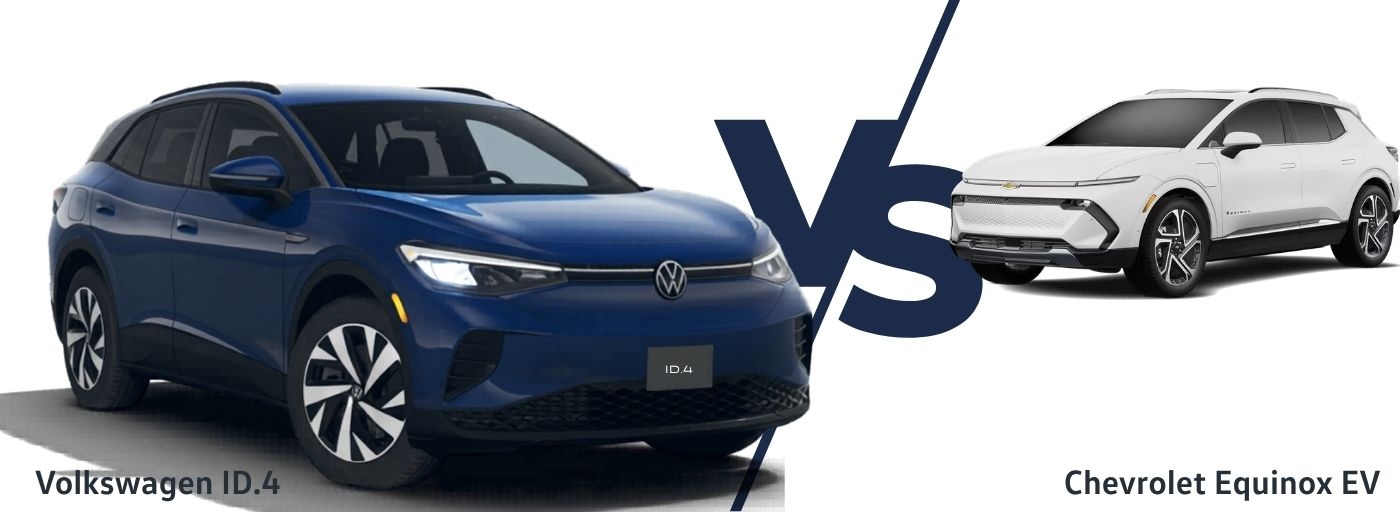
ID.4 Versus Chevrolet Equinox EV
The Equinox EV is a spacious battery-electric vehicle that offers more for the family. The Equinox EV makes a statement as part of General Motors’ Ultium family of electric-drive vehicles. It comes in single-motor front-wheel drive and dual-motor all-wheel-drive models.
- When you compare single-motor models, you will find that the ID.4 is more powerful. The Equinox EV has 220 horsepower and 243 pound-feet of torque. The Volkswagen offers 282 horsepower and 402 pound-feet of torque.
- On ID.4 4Motion all-wheel-drive models, the dual-motor system delivers 302 horsepower and 501 pound-feet of torque. That is more than the Equinox EV’s 300 horsepower and 355 pound-feet of torque ratings.
- The ID. 4 has more cargo space overall than the Equinox EV. With the rear seat up, there is up to 30.3 cubic feet compared to the Chevrolet’s 26.4 cubic feet. Fold down the rear seat, and the ID.4 provides up to 64.2 cubic feet of space compared to 57.2 cubic feet in the Equinox EV.
- Feature-wise, it is the small things that separate the ID.4 from the Equinox EV. Found standard on the ID.4 Pro: dual-zone climate control for the driver and passenger; speed-sensitive volume control for the audio system; color-adjustable ambient lighting; a driver attention alert system; and heated windshield washer jets.
- When it comes to warranties, Volkswagen has the advantage with four-year or 50,000-mile basic coverage compared to Chevrolet’s three-year or 36,000-mile warranty. Also, Volkswagen offers a longer rust protection warranty of seven years or 100,000 miles, compared to Chevrolet’s three-year or 36,000-mile warranty.
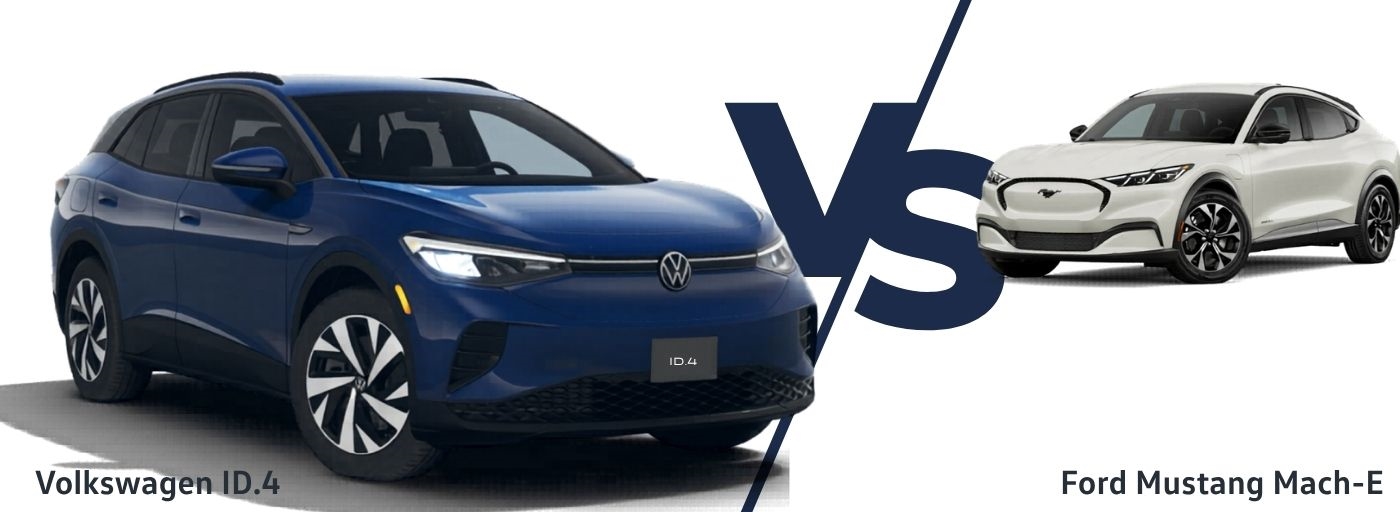
ID.4 Versus Ford Mustang Mach-E
Ford applied its iconic name to a practical four-door electric SUV. While incorporating elements of the ponycar’s design, it offers advanced features not found on its muscle-car namesake. It comes in single-motor rear-wheel drive and dual-motor all-wheel-drive models.
- When you compare single-motor models, you will find that the ID.4 is more powerful. The Mustang Mach-E has 266 horsepower and 317 pound-feet of torque. The Volkswagen offers 282 horsepower and 402 pound-feet of torque.
- There is more overall cargo space in the ID.4 compared to the Mustang Mach-E. With the rear seats down, there is up to 64.2 cubic feet compared to the Ford’s 59.7 cubic feet.
- Volkswagen offers IQ.DRIVE on the ID.4 – a suite of driver assistance features engineered to keep you and your occupants safe. As part of IQ.DRIVE, the ID.4 offers Lane Assist standard. The Mustang Mach-E offers fewer standard lane-assistance technologies in its driver-assistance package.
- The shorter wheelbase of the ID.4 yields a sharper turning radius than the Mustang Mach-E (31.5 vs. 38.1 feet). This makes the Volkswagen a much nimbler vehicle.
- When it comes to starting up the Mustang Mach-E, you have to press a button. In the ID.4, all you have to do is push the brake pedal, and it’s ready to go.
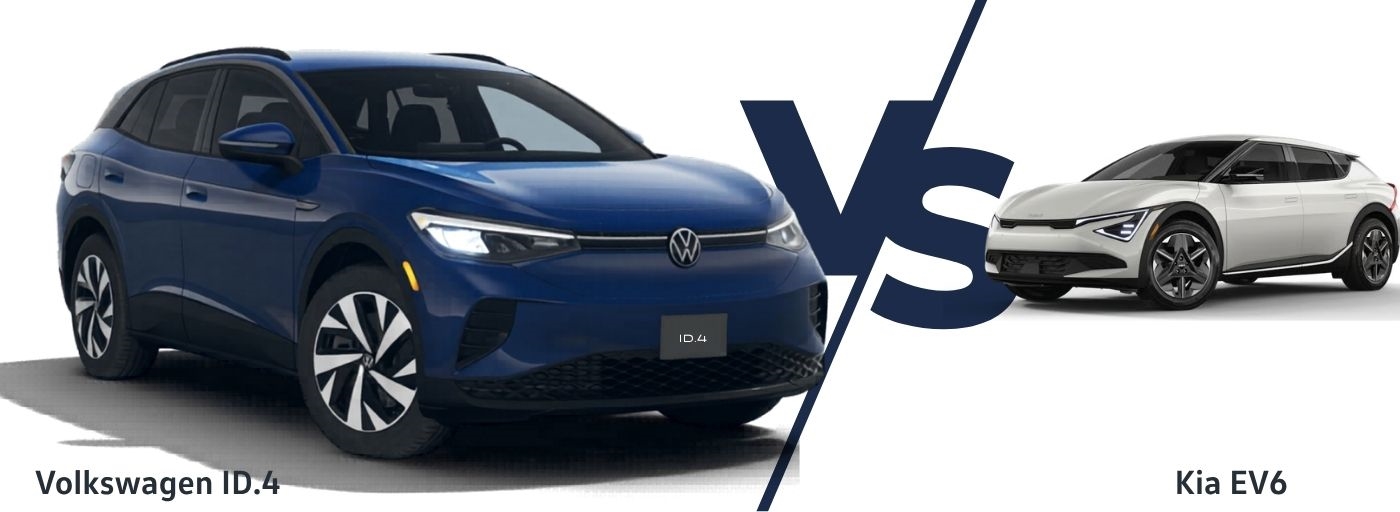
ID.4 Versus Kia EV6
Kia introduced their EV6 a few years ago with a sportier look and a high-performance version. Since its mid-cycle refresh, they have focused on a rear- and all-wheel-drive lineup with three basic trim levels. They retained the fastback-like styling and advanced interior for 2026.
- When you compare single-motor models, you will find that the ID.4 is more powerful. The EV6’s standard driveline has 167 horsepower and 258 pound-feet of torque. The Volkswagen offers 282 horsepower and 402 pound-feet of torque.
- The ID.4 has more cargo space overall than the EV6. With the rear seat up, there is up to 30.3 cubic feet compared to the Kia’s 24.4 cubic feet. Fold down the rear seat, and the ID.4 provides up to 64.2 cubic feet of space compared to 46.7 cubic feet in the EV6.
- Our infotainment screen is larger at 12.9 inches in the ID.4, compared to 12.3 inches in the EV6. Volkswagen also offers standard wireless smartphone connectivity for both Apple CarPlay and Android Auto.
- To start the EV6, you have to press a button. In the ID.4, all you have to do is sit down and push the brake pedal, and it’s ready to go.
- Does your EV6 have heated windshield washer jets or pedestrian sound warning generation? These are small things, but they are standard on the ID.4.
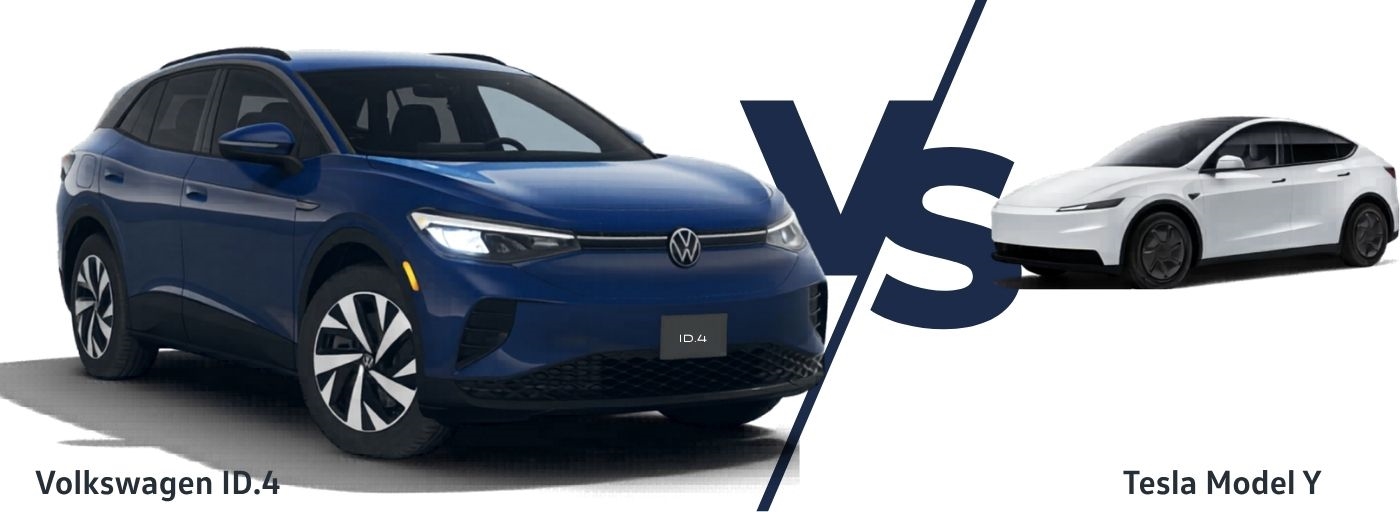
ID.4 Versus Tesla Model Y
The start-up automaker set the standard for all EVs to follow. The Model Y is an SUV that pushes advanced styling, driver engagement, and performance while utilizing a proprietary charging network. It comes in single-motor rear-wheel drive and dual-motor all-wheel-drive models.
- For single-motor models, you will find that the ID.4 has more low-end torque with 402 pound-feet. The Model Y only has 309 pound-feet of torque.
- The shorter wheelbase of the ID.4 yields a sharper turning radius than the Model Y (31.5 vs. 39.8 feet). Combined with a shorter overall length, this makes the Volkswagen a nimbler vehicle.
- The Model Y has no instrument cluster in front of the driver; every function is situated on the center screen, and the controls are confusing. On the other hand, the ID.4 offers a more comfortable driving experience overall.
- The ID.4 offers standard wireless smartphone connectivity for both Apple CarPlay and Android Auto. This feature is not available on the Model Y.
- Where do you get your Model Y serviced? In some places, you may not find a service center near you. There are more places to get your ID.4 serviced across the USA. We even offer Roadside Assistance, too!
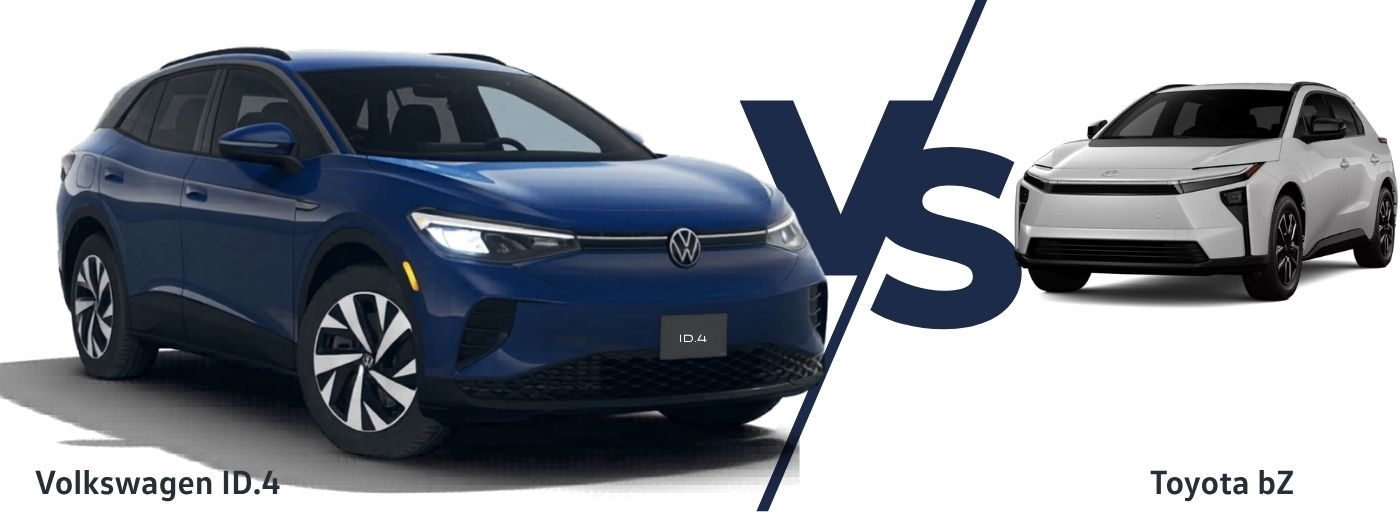
ID.4 Versus Toyota bZ
Toyota offers a battery-electric vehicle that looks the part and feels right at home. The newly revised four-door SUV offers advanced technology alongside its reputation for strong reliability. It comes in single-motor front-wheel drive and dual-motor all-wheel-drive models.
- When you compare single-motor models, you will find that the ID.4 is more powerful, offering 282 horsepower and 402 pound-feet of torque. The bZ only has 221 horsepower and 198 pound-feet of torque.
- On ID.4 4Motion all-wheel-drive models, the dual-motor system delivers 302 horsepower and 501 pound-feet of torque. That is more than the bZ’s 338 horsepower and 323 pound-feet of torque.
- To start the bZ, you have to press a button. In the ID.4, all you have to do is sit down and push the brake pedal, and it’s ready to go.
- The ID. 4 has more cargo space overall than the bZ. With the rear seat up, there is up to 30.3 cubic feet compared to the Toyota’s 27.7 cubic feet. Fold down the rear seat, and the ID.4 provides up to 64.2 cubic feet of space compared to 56.9 cubic feet in the bZ.
- When it comes to warranties, Volkswagen has the advantage with four-year or 50,000-mile basic coverage compared to Toyota’s three-year or 36,000-mile warranty. Also, Volkswagen has a longer rust protection warranty of seven years or 100,000 miles compared to Toyota’s five-year warranty.