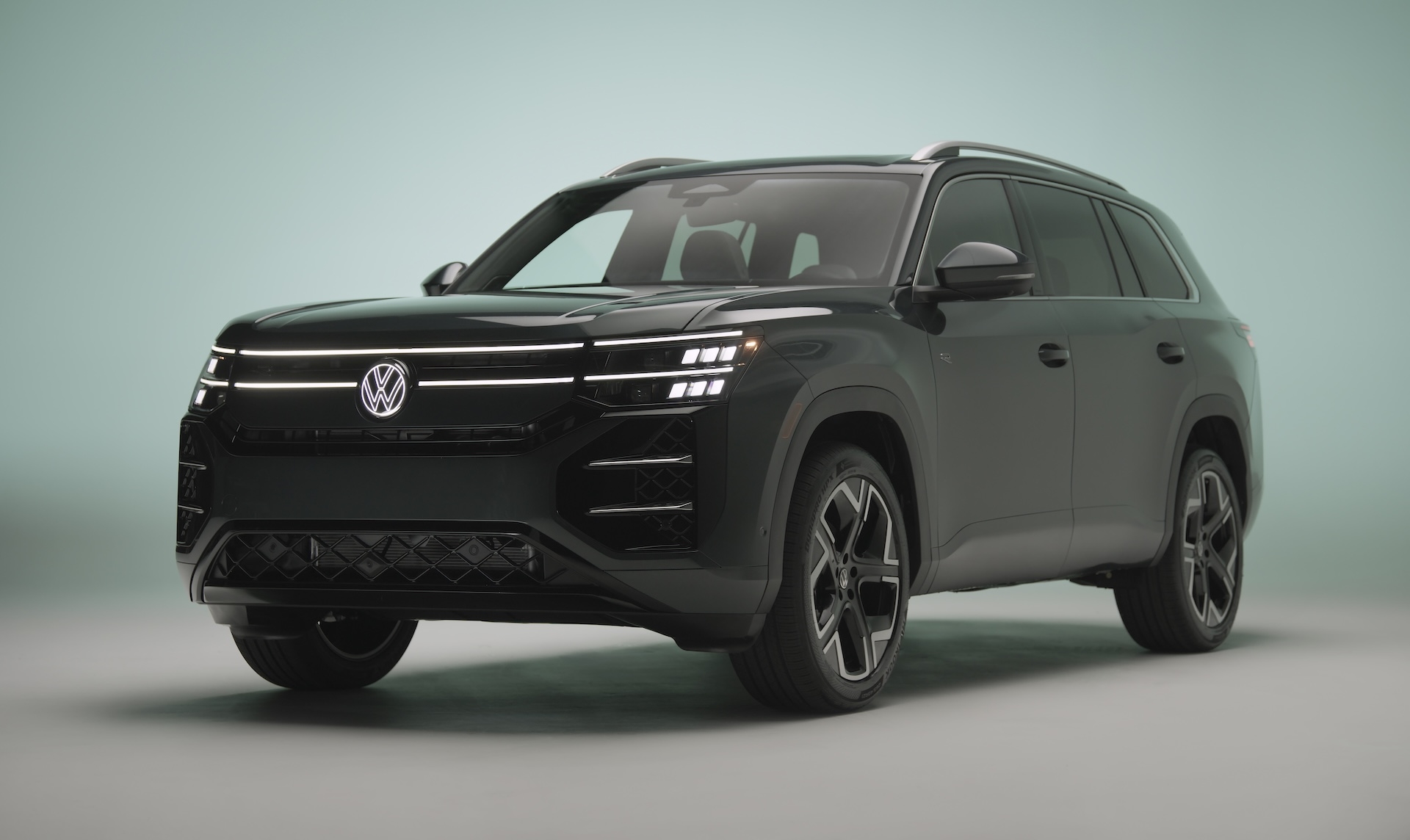
At the beginning of April at the New York Auto Show, Volkswagen unveiled the 2027 Atlas, the first redesign of the model in its ten-year history. It is designed to provide more of everything customers appreciated about the first model — a more confident design, more intuitive technology, more power, and an overall more premium experience. Team Gillman Volkswagen gives you this first look at the 2027 Atlas.
The first Atlas debuted as a 2017 model. The three-row SUV was designed from the ground up for the North American market, which appreciates vehicles of this size, and it was built in the U.S. at the company’s Chattanooga, Tennessee assembly plant. Now, after becoming the brand’s second-best seller with an average of nearly 74,000 units sold annually, the Atlas receives its first full redesign.
The model introduces a new front-end design for the brand, featuring six small LED daytime running lights in each front corner, along with two LED light bars that extend across the full width of the front. All models except the base come with this setup; the base model has a single full-width light bar. Additionally, on all but the base model, the VW badge lights up with the outlines of both the V and W illuminated. The rest of the front is a combination of black and body-color graphics, with all engine breathing located below the bumper.
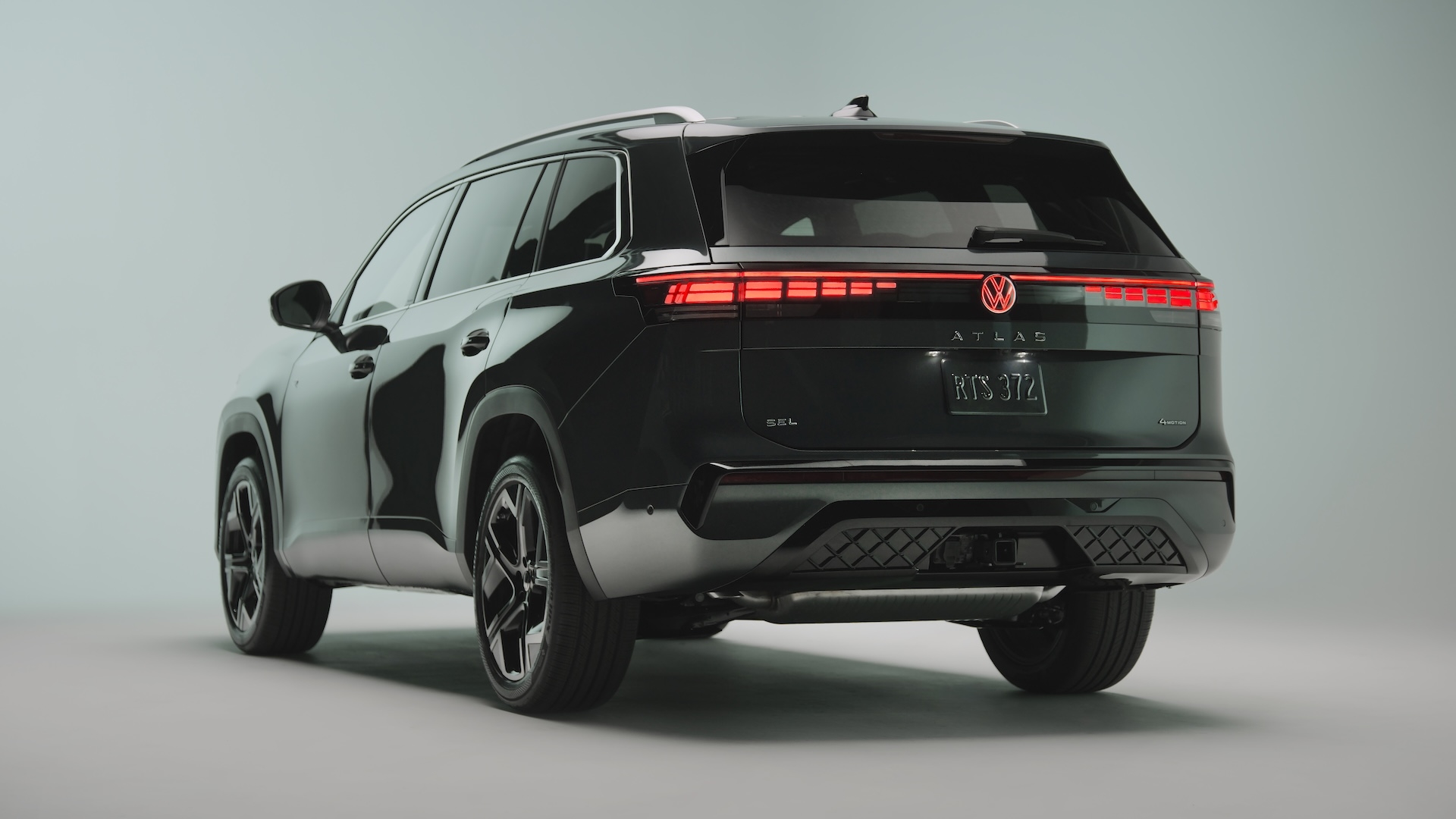
There was never any problem with the size of the Atlas, so the body grows just one inch overall, while wheelbase, width, and height remain unchanged. The silhouette and greenhouse are also similar to the current model. The former front and rear fender character lines stretch longitudinally to connect at the doors and rise over each wheel. At the rear, the Atlas features a wide LED light bar with multiple rectangular elements on each side that tie in with the front DRLs. The taillights extend deep within the tailgate, which is powered and hands-free on all trim levels.
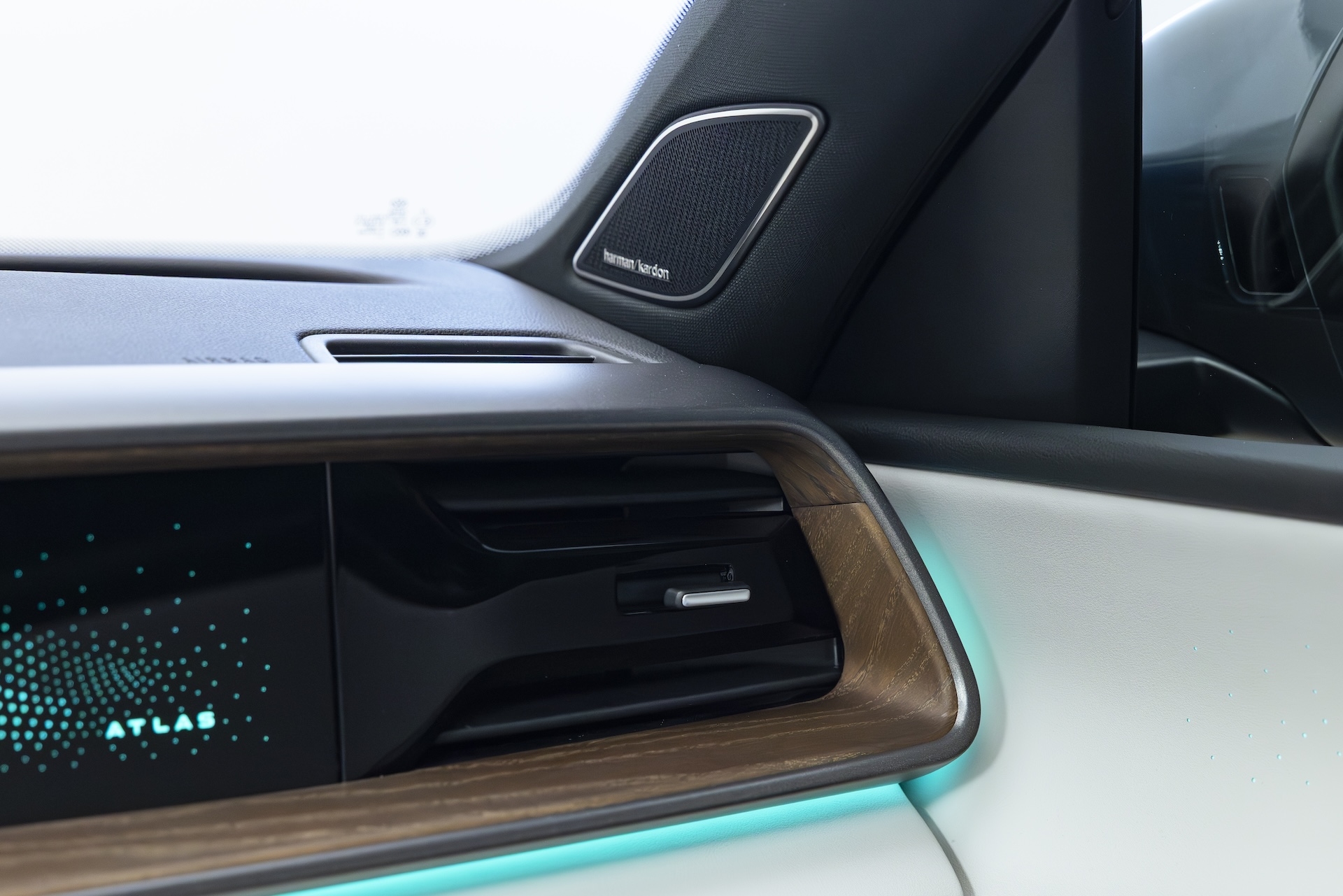
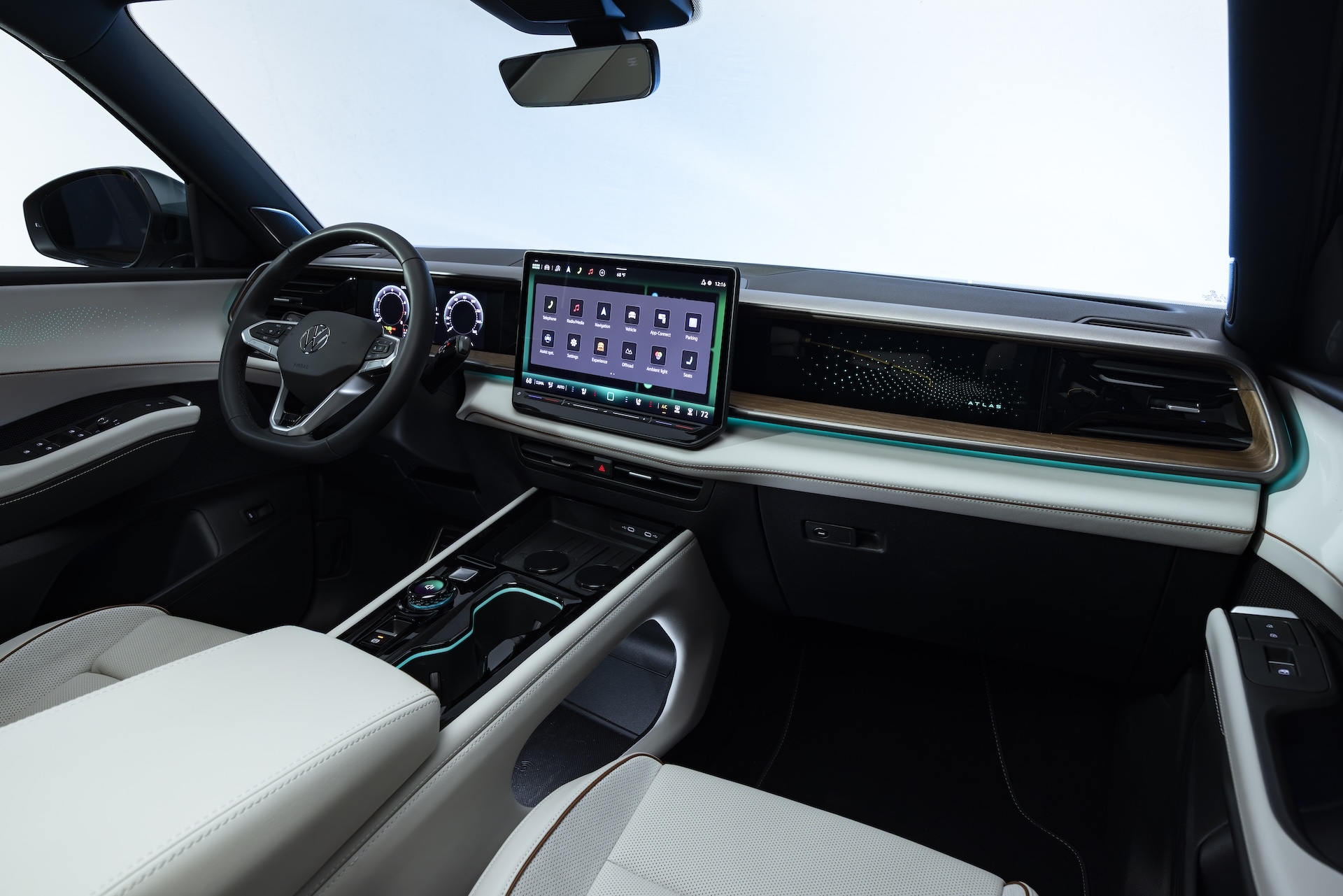
Inside, the changes are more dramatic. An inch-deep standard wood grain finish rim surrounds and sets back the entire dash from door to door, encapsulating the 10.3-inch digital driver display and side vents. At the center is a touchscreen resting on a lower full-sidth soft-surface shelf that is 12.9 inches on the base trim and 15 inches on all others. The steering wheel has a handsome 3-spoke design with physical controls on the left and right spokes. Soft surfaces abound on the door panels and the sides of the center console, where legs tend to bump.
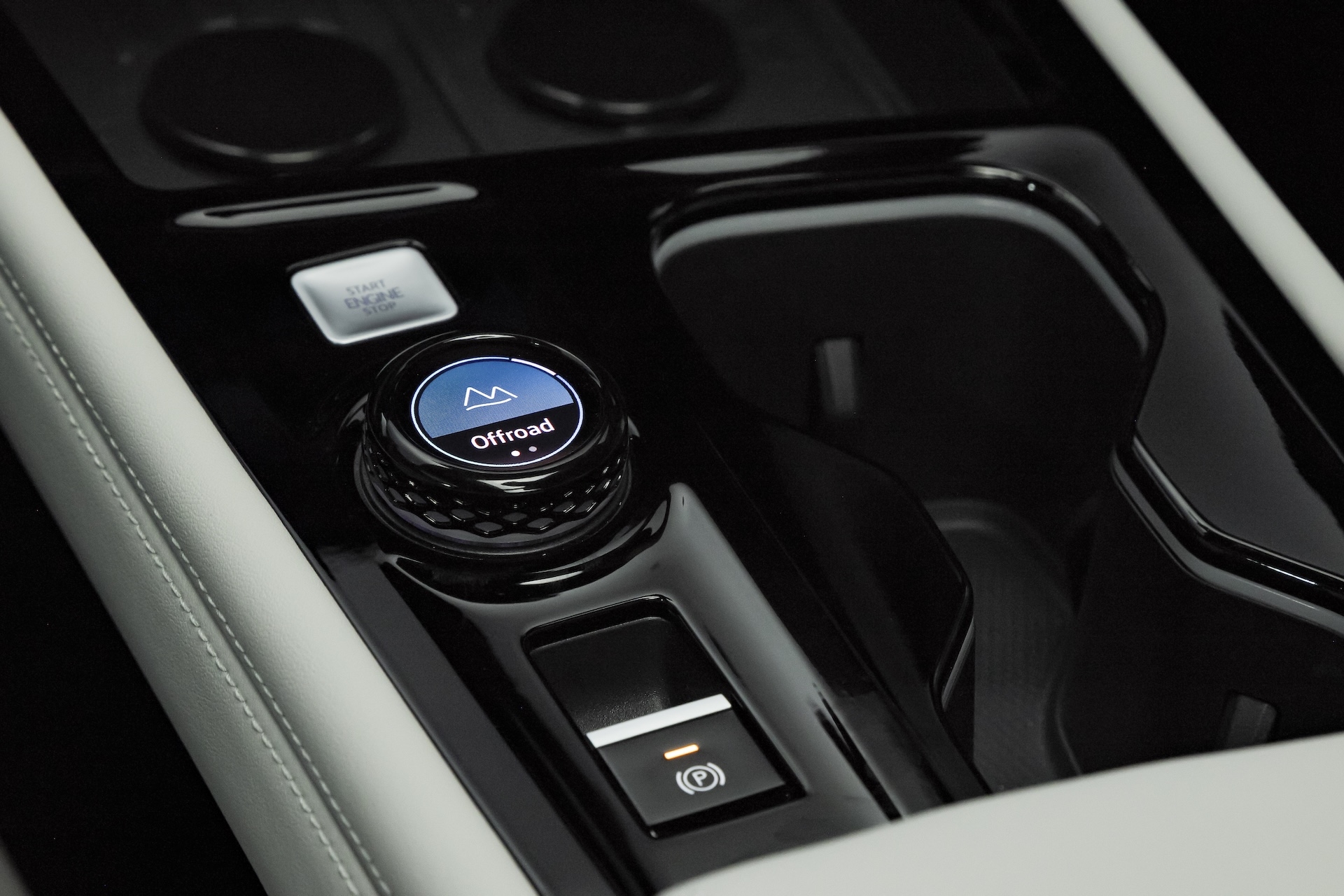
The console features dual wireless phone chargers with MagSafe technology to secure the phones, along with dual cupholders enhanced by the interior’s extensive ambient lighting. A large knob sits within the console, serving as a volume control by default, but it can also be used to manage drive modes and "atmospheric” adjustments for ambient lighting and audio shaping. Below is a sizable and easily accessible storage area with an additional felt-lined compartment under the center armrest.
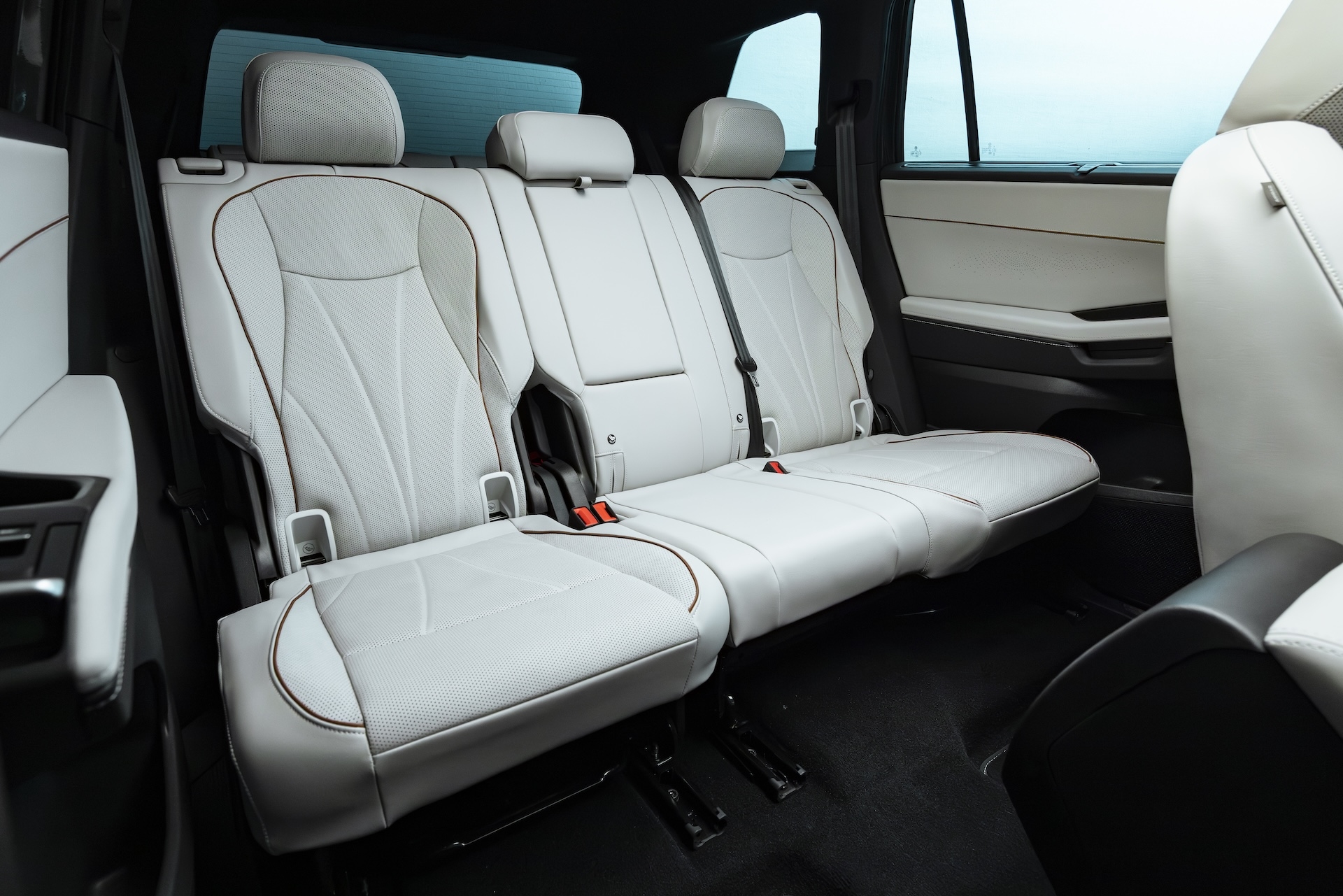
The seats, at least on the displayed model, have contours that look like works of art, and this applies to the second-row captain’s chairs as well. Second-row passengers also enjoy climate vents in the B-pillars and standard sunshades for the door windows. With a single manual control, each second-row seat slides forward, and both the seatbacks and cushions tilt forward to provide access to the third row. The backs of the third-row seats also look attractive and can accommodate adults.
Powering the Atlas is a new turbocharged 2.0-liter inline-4 producing 282 horsepower, which is 30 more than the outgoing model, along with 258 lb-ft of torque. The engine is paired with an 8-speed automatic transmission, sending power to either the front or all four wheels. Fuel mileage has not been officially determined, but it is expected to at least match the current model. The towing capacity is 5,000 pounds.
Naturally, the IQ.DRIVE suite of driver-assist and safety technologies is standard across the model line, with a driver-initiated lane-change function as a new Travel Assist feature. Also new is that if the Travel Assist detects a medical emergency or a non-responsive driver, the system can now gently guide the Atlas to a safe stop on the side of the road. Previously, it could only slow down to a stop and activate the hazard lights, but the lane-change feature is new. For added convenience, both front and rear parking sensors, along with a surround-view camera system, are now standard on all models.
All this information comes from just the initial reveal of the new Atlas. More specific information on pricing, trim levels, packaging, and mpg figures is expected to be announced closer to the launch date, which is expected in late summer or early fall of 2026. Contact a Team Gillman Volkswagen sales professional to be notified as additional information becomes available.